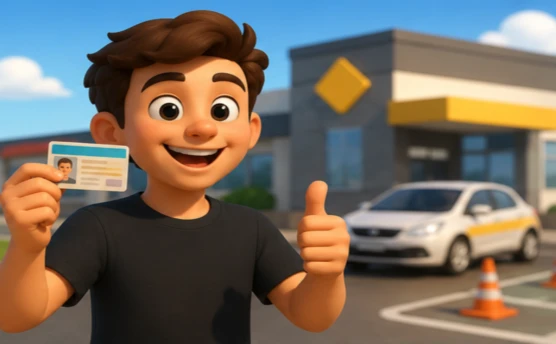
A driver's license is an official document that permits an individual to operate a vehicle on public roads. In the United States, each state has its own Department of Motor Vehicles (DMV) which is responsible for issuing these licenses. A driver's license not only certifies your ability to drive but also serves as an important form of identification.
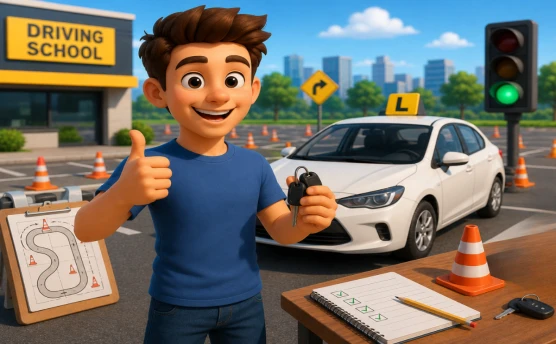
To get a driver's license, you must meet certain age and residency requirements. Typically, individuals must be at least 16 years old to apply, although this can vary slightly from state to state. Additionally, proof of residency in the state where you are applying is usually required.
It's important to recognize that driving is a privilege, not a right. Having a driver's license implies that you understand and agree to obey local traffic laws and regulations. Failure to do so can result in fines, the suspension of your license, or even legal action.
Before you can obtain a driver's license, you must pass a written test that assesses your knowledge of road signs, traffic laws, and safe driving practices. The test is designed to ensure that all drivers have a basic understanding of how to operate a vehicle safely.
To prepare for the written test, obtain a copy of your state’s driver's manual. This manual contains all the information that will be on the test, including detailed descriptions of local laws and tips for safe driving. Many states offer practice tests that you can take to get a feel for the types of questions you will encounter.
Studying the driver's manual thoroughly is essential. Consider forming a study group with friends or taking a preparatory course if available. Remember that staying calm during the test will help you to recall what you have studied.
After passing the written test, the next step is the road test, where you demonstrate your driving skills in a real-world setting. The road test assesses your ability to control a vehicle, obey traffic signals, and navigate safely in traffic.
Schedule your road test as soon as you feel comfortable with your driving skills. Many states offer the option to book this test online or over the phone. On the day of the test, make sure to bring all necessary documentation, including your learner's permit and proof of insurance.
Practice is key to passing the road test. Spend ample time behind the wheel with a licensed driver to ensure you are confident in your abilities. During the test, stay calm and focus on demonstrating safe and responsible driving.
Many states in the U.S. have implemented Graduated Driver Licensing (GDL) programs, which are designed to help new drivers gain experience under low-risk conditions. The GDL system involves several stages, starting with a learner's permit, followed by an intermediate license, and finally, a full unrestricted license.
The learner's permit allows you to drive with a licensed adult in the car. After meeting the requirements for practice driving, such as logging a certain number of hours, the next step is obtaining an intermediate license, which generally allows you to drive unsupervised but with some restrictions.
Understanding the GDL program in your state is crucial since the rules and requirements can differ significantly. Check with your local DMV to understand how long each stage lasts and what is required to advance to the next level.
When applying for a driver's license, it's essential to have all the required documents on hand. These typically include proof of identity, such as a birth certificate or passport, proof of residence like utility bills, and Social Security number.
Each state might charge different prices for obtaining a driver's license. These fees vary not only by state but also by the type of license being applied for. Make sure to check the current fee schedule for your state online or by contacting their DMV office.
Keeping your documentation organized and understanding the fee structure will help streamline the application process and avoid any last-minute surprises. Double-check that you have everything needed before your DMV appointment.
Applying for a driver's license can be a daunting process, but preparing properly can make it easier. Start early and review all the steps involved in the process, ensuring you understand what each step requires.
Taking an approved driving course or attending a driver's education program can be very beneficial. These programs provide structured learning experiences that can build your confidence and skills behind the wheel.
Finally, stay patient and persistent. If you don't pass the test on the first try, don't be discouraged. Learn from the experience, address the areas you need to improve, and try again. With proper preparation and practice, you can successfully obtain your driver's license.